
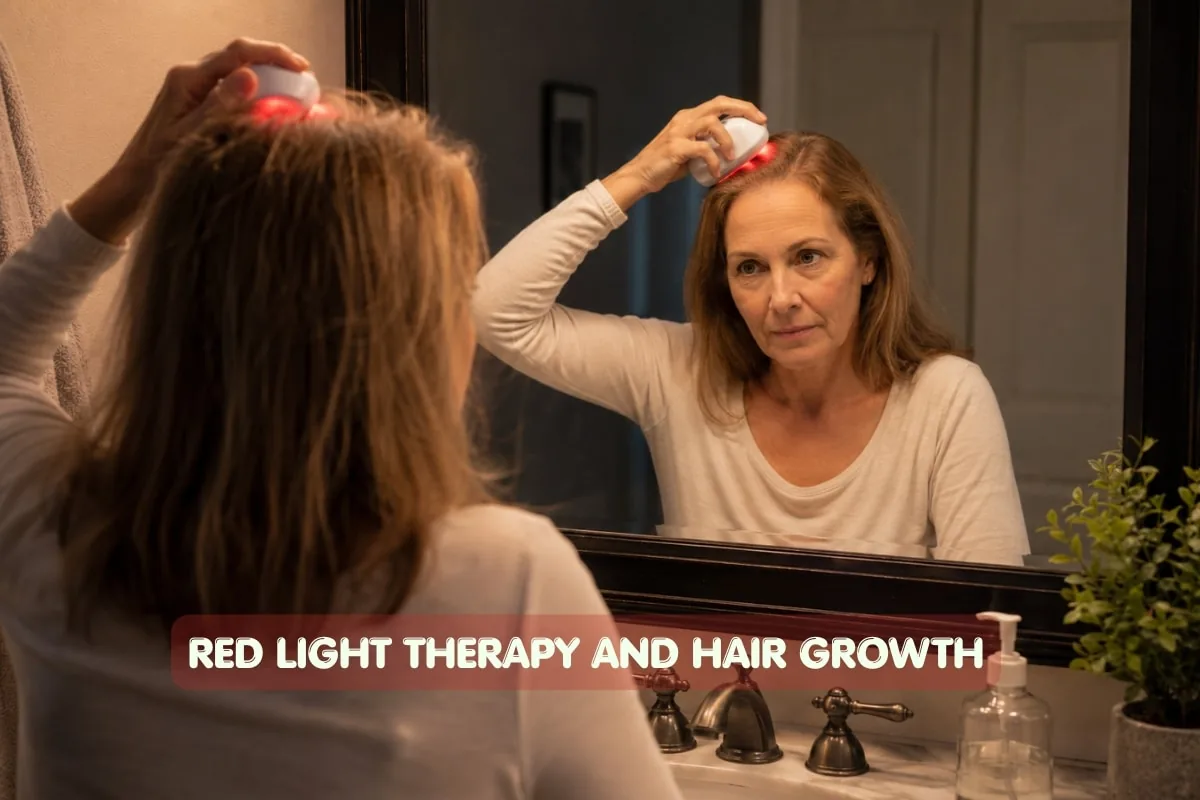
We don’t think much about our hair until it starts to feel different. A little thinner. A little more fragile. Sometimes we look in the mirror and don’t quite recognize the part line. Or run a hand through it and feel more scalp than we used to. It’s strange how something so small can carry so much of our identity.
I think there’s a real kind of grief in noticing your hair changing with age. It’s not dramatic. Just enough to make you pause. Maybe that’s why more and more people are asking about things like red light therapy and hair growth.
Because it sounds gentle. Non-invasive. Safe.
Like maybe there’s still hope if we take care of things the right way.
So that’s what this is. Not a pitch. Not a miracle story. Just an honest place where we can look at what red light therapy might actually do for hair growth. And also, it might not deliver what people expect.
Because the truth lives in both the help and the limits.
If you’re curious, I promise to keep it honest. No pressure. No fluff.
Just a simple walk-through of what this is. And what it isn’t.
Who May Benefit Most From Red Light Therapy?
Red light therapy is usually explored by people who notice gradual thinning rather than sudden, complete hair loss. Sometimes it’s women seeing a wider part line with age. Sometimes it’s stress shedding after illness, burnout, or emotional strain. Sometimes it’s postpartum hair changes that never fully seemed to settle afterward.
It’s also commonly discussed by people dealing with early-stage genetic thinning, sometimes called androgenetic alopecia, where hair slowly becomes finer over time.
Understanding some of the more common causes of female hair loss can help set realistic expectations before trying any treatment.
Red light therapy is generally considered supportive, not curative.
For some people, the goal may be fuller growth. For others, it may simply help improve scalp health or slow further thinning over time.
Benefits of Red Light Therapy and Hair Growth
So here’s what I’ve learned. Red light therapy isn’t a miracle, but it might be something close to a nudge in the right direction. It works quietly, like light through a window at sunrise. Not dramatic. But present.
Some people researching hair support also become interested in broader red light therapy benefits connected to skin, recovery, and overall wellness routines.
1. Stimulates Hair Follicles
Red light, especially in the low wavelengths around visible red, can help wake up your hair follicles. It's kind of like giving them a soft tap on the shoulder. Some follicles slow down or stop producing hair as we age, like falling asleep at their post. This kind of light reaches the scalp, where the follicles live, and helps kick-start a fresher growth cycle.
It does not force hair growth overnight, but it may help support a healthier growth cycle.
I guess what I mean is, if part of the problem is that your follicles are tired, this might help them stretch their legs a little.
2. Improves Scalp Blood Flow
Blood flow is one of those things we don’t think about until it’s not working well. Your hair needs oxygen. It also needs nutrients, which travel through your blood. When circulation improves in the scalp, more of that good stuff reaches the follicles. This makes it easier for them to grow stronger strands instead of thinner ones.
Imagine watering a plant that’s been in dry soil for too long. It won’t bloom right away. But you’ve started something good.
Hair growth usually responds more to consistency than to speed.
3. Reduces Inflammation
Sometimes your scalp is quietly irritated. Maybe you don’t see it. Maybe you do. And maybe that irritation is part of what’s slowing things down. Red light has been known to help calm certain types of inflammation by telling overly active cells to chill out a bit.
It doesn’t cure everything. But if inflammation is silently getting in the way of growth, calming it could help open the door again.
I think the most comforting part is this: you’re not being harsh to your scalp. The approach is generally less aggressive than many chemical-based treatments.
4. Boosts Cellular Energy (ATP)
This part can get science-y, but I’ll keep it simple. Every cell has a kind of “battery pack” inside it called mitochondria. When red light hits those mitochondria, they produce more energy, like charging your phone when it is about to die. That extra energy helps your hair follicles do their job better, especially if they’ve been slowing down.
It’s subtle. But real.
Researchers believe this added cellular energy may help follicles function more efficiently over time. That’s what this feels like to me.
5. Non-Invasive & Easy
Probably my favorite thing to say about red light therapy is that it’s gentle. It doesn’t involve cuts, chemicals, or pills. You shine a light on your scalp for a few minutes, a few times a week. That’s it. No drama. No needles.
For people who are tired of aggressive treatments or complicated routines, this can feel like a welcome break. Some people also explore red light therapy for skin care and beauty for similar reasons.
But I think it’s also important to say this:
It’s not magic.
Just because it’s easy doesn’t mean it works overnight. Sometimes you won’t see a change for a while. Sometimes the change is smaller than you hoped. But if you’re looking for something that respects your body instead of shocking it into obedience… this might be something worth trying.
Sometimes, gradual, supportive approaches are easier to maintain over the long term than aggressive treatments.
Warnings and Considerations
If you’re still reading, I’m guessing you’re someone who wants the whole picture. Not just the hopeful parts, but the realistic ones too. So here’s the other side of the page. No fear. Just facts, softened with care.

1. Results Take Time
This one’s big. And kind of frustrating. Red light therapy isn’t about instant results. It’s more like planting seeds. Things happen slowly, quietly. You may not see much at first. Then maybe, weeks or months later, something shifts a little.
If you try this, patience is the name of the game. It might feel like nothing’s happening. But sometimes progress hides from view at the beginning.
Hair growth cycles naturally move slowly, so visible changes often take several months.
2. Not for Everyone
There are limits. If hair loss has been going on for a very long time, and follicles are already gone, red light won’t bring those back. Red light therapy may support existing follicles, but it cannot usually restore follicles that are no longer active.
Also, certain medical conditions might make this less effective. Or… not a good idea at all. So it helps to be honest about your situation. And okay with the possibility that this might not be the right fit.
I think that matters. That is why realistic expectations matter before starting any hair growth treatment.
3. Possible Side Effects
Most folks don’t have side effects. But some people report mild effects, such as a warm sensation on the skin, a bit of redness, or a tingling sensation after using the device. It usually goes away fast, but it’s still worth knowing.
It’s not painful. But still. If your skin is extra sensitive, you’ll want to ease in slowly.
4. Overuse Isn’t Helpful
This part surprised me, honestly. You’d think more light would equal better results. But that’s not how this works. Too much red light can be overstimulating. More sessions do not necessarily improve results and may increase irritation for some people.
It’s a “just enough” kind of thing. Like watering a plant. Too little, it stays thirsty. Too much, the roots get soggy and stop working.
More isn’t better. Consistency is.
5. Check Medications & Health Conditions
If you’re on certain medications or receiving treatment for medical issues (like cancer), red light therapy might not be safe. Some meds cause light sensitivity. Some health conditions don’t mix well with exposure.
So please check first. With your doctor, especially if you have medical conditions, scalp disorders, or photosensitivity concerns.
Because your safety is more important than any new routine.
6. Device Quality Matters
There are a lot of products out there. Some devices are clinically designed, while others are poorly manufactured or underpowered. If a device is weak or poorly built, you might not get the wavelengths or strength needed to actually reach your follicles in a meaningful way.
It’s okay to ask questions. To read specs. To take your time choosing something that fits.
Wavelength quality and device strength can affect whether enough light actually reaches the follicles.
I guess I just wanted to say all this plainly. Because it’s not about selling something. It’s about giving you space to decide without pressure.
And maybe it helps to know everything first, not after.
Practical Tips for Trying Red Light Therapy
If you’re thinking about trying red light therapy, I want you to feel steady as you go in. Not rushed. Not overwhelmed. Just ready, in your own way.
Start simple. Begin with a schedule that realistically fits your life, even if it’s only a few short sessions each week. Most devices come with recommended usage guidelines, and it’s usually better to follow those instructions consistently rather than overdoing it. I
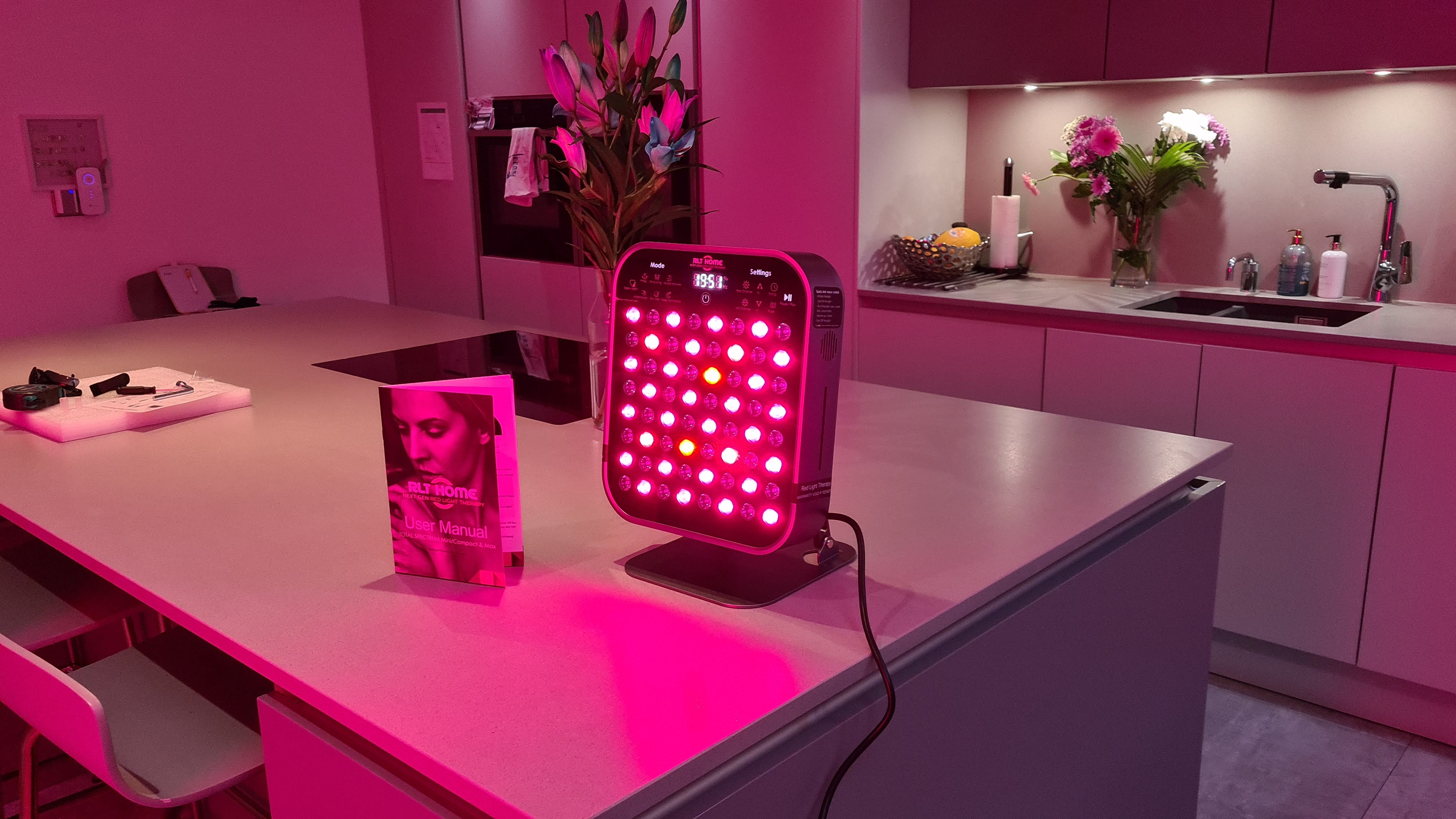
f you’re researching devices, it helps to focus on wavelength range, ease of use, and treatment consistency instead of flashy marketing claims. Some people prefer compact at-home options like the Total Spectrum Mini red light therapy device because they make it easier to maintain regular sessions over time.
Consistency usually matters more than intensity with red light therapy.
Short, regular sessions are generally considered more effective than overusing the device. Just stay consistent. And give it room to change slowly.
It also helps to care for your scalp while you’re doing this. Keep it clean and comfortably moisturized, without layering on heavy products that can create buildup over time. Some people also combine red light therapy with other natural remedies for women’s hair loss, focused on nutrition, scalp care, and overall hair health.
If you’re not sure whether this therapy is right for you, talk to someone. A healthcare provider or skin expert who knows your health history. It’s worth checking, especially if you’re on medications or have conditions that affect skin sensitivity.
The goal is not perfection. The goal is to create a routine you can realistically maintain over time.
Hair-related changes are usually gradual, so consistency and patience matter.
Closing Reflection

There’s something comforting about a gentle light that doesn’t promise the world. It just shows up. That’s how I’ve come to think of red light therapy. Not as a miracle, but as one possible supportive tool for people trying to manage gradual hair thinning.
It won’t restore what’s completely gone. It won’t erase time. But for some people, it may help support healthier scalp conditions and improve the appearance of thinning hair over time. And some days, that feels like more than enough.
What matters most, I think, is knowing both sides. The hopeful possibilities and the soft warnings. Because understanding both the benefits and limitations makes it easier to make informed decisions without unrealistic expectations. More calm. Less panic.
Hair health is rarely about an overnight transformation. Most approaches connected to red light therapy and hair growth work gradually and require consistency, patience, and realistic expectations.
If you made it this far, thank you for taking the time. I hope it helped you breathe a little easier. Or feel a little less alone.
Whatever you choose, I hope it feels like yours.
Whether you decide to try red light therapy or not, the most important thing is choosing an approach that feels informed, realistic, and sustainable for you.
0 Comments