
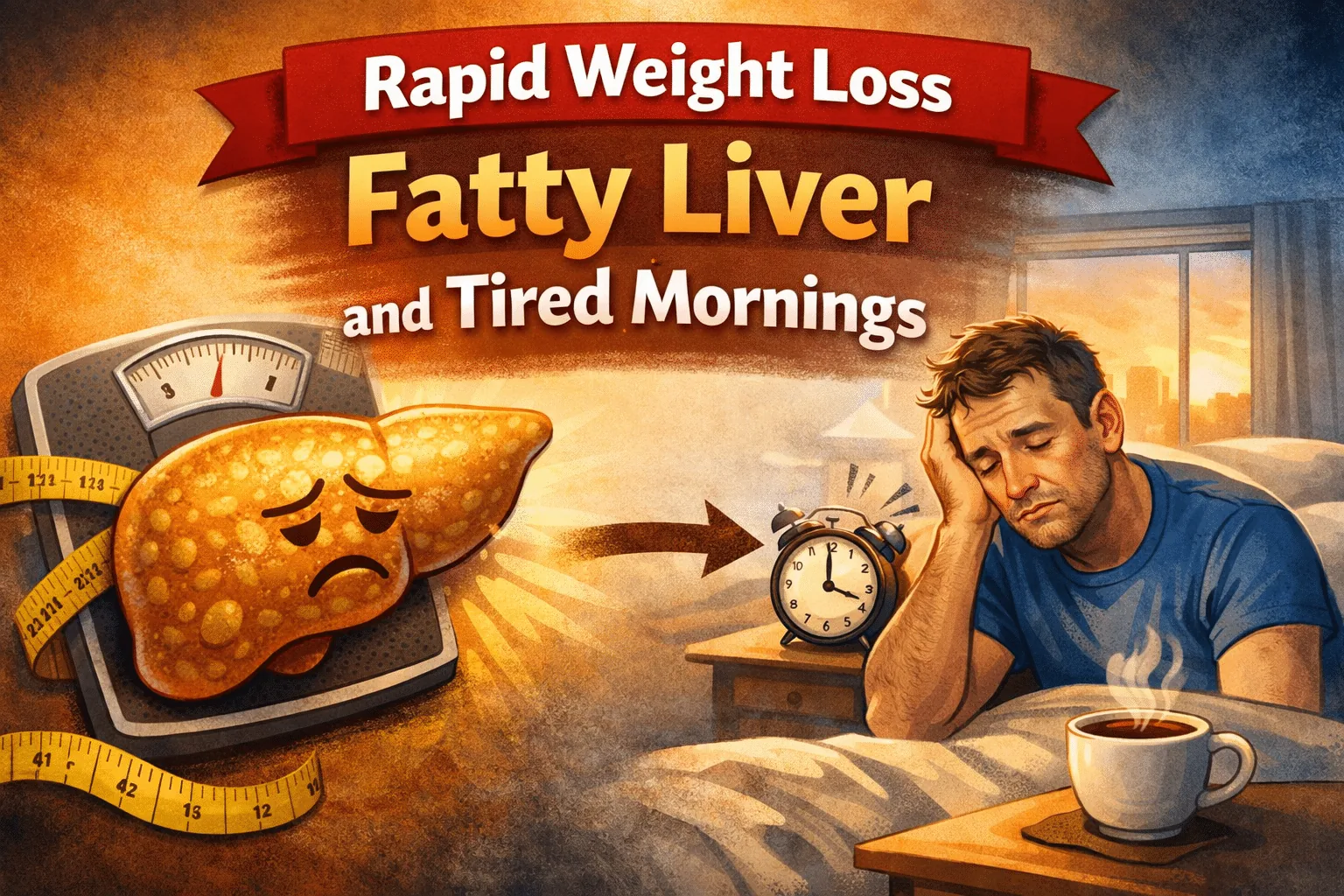
“Rapid weight loss fatty liver and tired mornings” is not the outcome most people expect when they finally see the number on the scale moving down. The common belief is simple: lose weight quickly, and energy should surge. Lighter body, clearer mind, stronger mornings.
Yet some people experience the opposite.
Instead of waking refreshed, mornings feel unusually heavy. The alarm rings, but the body feels slow to respond. Even after a full night of sleep, there can be lingering low morning energy, mild brain fog, or a sense that the day starts with less fuel than expected.
This contrast can be confusing. Progress is visible on the scale, but the body does not always feel stronger.
One possible reason lies beneath the surface. During rapid weight loss, large amounts of stored fat begin moving through metabolic pathways at once. The liver plays a central role in processing these changes, helping regulate glucose, break down fatty acids, and maintain balance overnight.
When this process accelerates quickly, the body can temporarily shift into a more demanding metabolic state. For some people, that adjustment quietly shows up in the morning as fatigue, slower mental clarity, or the feeling that energy has not fully reset after sleep.
When Weight Drops Quickly but Morning Energy Does Not Return
Rapid weight loss is often expected to bring renewed energy. Yet some people notice the opposite. Rapid weight loss morning fatigue can appear even while the scale shows steady progress, leaving mornings feeling slower and heavier than expected.
The expectation: lighter body, more energy
For many people, the promise of rapid weight loss comes with a clear expectation. If the body becomes lighter, everyday life should feel easier. Climbing stairs should take less effort. Moving through the day should feel smoother. Most of all, mornings should feel more energised.
This expectation is understandable. Losing excess weight is often associated with improved metabolism, better sleep, and increased vitality. Many people imagine waking up earlier, feeling refreshed, and starting the day with more motivation than before.
Because of this belief, rapid progress on the scale can feel like proof that better energy is just around the corner.
<h3″>The unexpected reality: waking up drained despite progress
But for some individuals, the first noticeable change is not more energy. It is the opposite. Even with visible weight loss, mornings can feel unusually slow and heavy.
Instead of waking refreshed, there may be morning exhaustion during weight loss, sluggish thinking, or the feeling that the body has not fully recovered overnight. The scale shows progress, yet the body still asks for more time to wake up.
This experience can be confusing. It may even raise doubts about whether the weight loss approach is helping or quietly placing extra pressure on the body.
In many cases, this temporary fatigue is connected to how the body adapts when weight is lost very quickly. Rapid metabolic shifts can require additional work from internal systems, and that adjustment sometimes becomes most noticeable in the quiet hours of the morning.
Why Mornings Often Reveal What the Body Is Struggling With
Mornings can quietly reveal how the body is coping with rapid change. For some people, tired mornings during weight loss become the first noticeable signal that the body is still adjusting to the pace of fat loss.
Nighttime recovery and liver workload
During sleep, the body enters a repair-and-recovery phase. Hormones shift, tissues regenerate, and metabolic systems work quietly in the background. The liver plays a major role in this process. It helps regulate blood sugar, processes fatty acids released from fat stores, and supports detoxification pathways.
When weight loss happens quickly, the amount of fat being mobilised can increase significantly. The liver may spend more of the night processing these changes. This extra workload does not always produce obvious symptoms during the day, but it can contribute to fatigue during rapid dieting, especially when the body wakes up before these internal processes have fully stabilised.
Energy regulation and glucose stability during sleep
Another important overnight task involves maintaining stable blood glucose levels. While you sleep, the body still needs a steady supply of energy to keep the brain and organs functioning. The liver helps release small amounts of glucose into the bloodstream to maintain this balance.
During periods of rapid dieting, energy intake may be significantly lower than usual. This can make overnight glucose regulation more challenging. If the balance becomes less stable, the body may wake up feeling slower, slightly foggy, or short on energy.
For some people, this shift shows up as low energy after rapid weight loss, particularly in the early hours of the day before the first meal helps restore metabolic balance.
How Rapid Fat Mobilisation Can Affect Morning Energy
When large amounts of stored fat begin moving through the body quickly, metabolism has to adjust. This is one reason discussions around rapid weight loss fatty liver often include changes in daily energy, especially how the body feels first thing in the morning.

Large release of stored fatty acids
When weight loss happens gradually, fat leaves storage in a steady and manageable way. During rapid dieting, however, this process can accelerate significantly. Large amounts of stored fatty acids begin circulating through the bloodstream as the body breaks down fat reserves for energy, a process linked to fatty acid metabolism.
The liver becomes one of the main processing centres for these fatty acids. It must convert, package, and distribute them while continuing its normal roles in glucose regulation and metabolic balance. When this shift happens quickly, the body may temporarily experience metabolic fatigue during dieting, especially during the early phases of aggressive weight reduction.
Temporary metabolic strain while the body adjusts
The body is remarkably adaptable, but sudden metabolic changes still require time to stabilise. Rapid fat mobilisation alters how energy is produced, transported, and used throughout the body.
During this adjustment period, some individuals notice dieting fatigue warning signs, particularly in the morning hours. The body may still be recalibrating overnight processes related to energy regulation, hormone signalling, and nutrient utilisation.
These temporary shifts do not necessarily mean something is going wrong. In many cases, they simply reflect how the body responds when weight loss happens faster than usual. As metabolism gradually adapts, energy levels often begin to stabilise again.
Signals the Body May Be Asking for Slower Progress
Not every form of fatigue during weight loss should be ignored. When the body adapts to rapid changes, it often sends subtle signals that the pace may be too aggressive. These signals do not always indicate that something is wrong, but they can indicate that internal systems are working harder than usual to maintain metabolic balance.
Heavy fatigue upon waking
One of the more noticeable experiences during aggressive dieting can be rapid weight loss and morning fatigue. Instead of feeling refreshed after sleep, the body may feel unusually heavy or slow to start the day. Even simple morning routines can require more effort than expected.
This type of fatigue does not always relate to sleep quality. It may reflect how the body is handling the metabolic workload created by rapid fat loss. When energy systems are still adjusting, the morning can be when low energy after rapid weight loss feels most noticeable.
Brain fog early in the day
Another common signal is reduced mental clarity during the first hours after waking. Thoughts may feel slower, concentration may take longer to build, and routine decisions can require more effort.
This kind of morning exhaustion during weight loss often improves later in the day once food intake resumes and blood glucose stabilises. The brain relies heavily on a steady energy supply, and rapid dieting can temporarily disrupt that balance overnight.
Low motivation despite successful weight loss
Sometimes the scale shows clear progress, yet the emotional drive to start the day feels lower than expected. Tasks that normally feel manageable may require more effort to begin.
This disconnect can be confusing. Visible weight loss usually motivates, but when the body is under temporary metabolic stress, fatigue during rapid dieting may affect mood and energy levels. In many cases, this phase improves as the body gradually adapts to the new metabolic pace.
Supporting the Body During Aggressive Weight Loss
Rapid weight loss places significant demands on metabolic systems. While the goal may be fat reduction, the body still requires adequate nutrients and recovery time to maintain balance. When the pace of change is high, simple supportive habits can help reduce fatigue during rapid dieting and make the transition easier for the body to manage.
Importance of adequate protein intake
During periods of rapid weight loss, protein becomes especially important. The body relies on amino acids to maintain muscle tissue, support enzyme production, and assist the liver in managing metabolic processes. When protein intake is too low, the body may struggle to maintain these functions efficiently.
Adequate protein can also help stabilise energy levels throughout the day. Without it, some individuals experience low energy after rapid weight loss, particularly in the early morning as the body transitions out of overnight fasting.
Hydration and electrolyte balance
Hydration plays a larger role in energy regulation than many people realise. Rapid dieting often leads to increased water loss, especially when carbohydrate intake is reduced. As water leaves the body, electrolytes such as sodium, potassium, and magnesium can shift as well.
When this balance becomes unstable, it may contribute to tired mornings, headaches, or general fatigue during weight loss. Maintaining consistent hydration and monitoring electrolyte intake can help support metabolic stability during aggressive weight reduction.
Allowing recovery time between calorie deficits
The body does not always benefit from continuous and aggressive calorie restriction. Short periods of nutritional recovery can allow metabolic systems to stabilise and restore energy balance.
Alternating phases of deficit with periods of adequate nourishment may help reduce metabolic fatigue during dieting. These recovery windows give the body time to adjust to fat loss without placing constant pressure on energy regulation systems.
Morning Fatigue Is Not Always About Sleep
When people wake up feeling drained, the first assumption is usually poor sleep. Yet during periods of rapid weight loss, morning fatigue can appear even when sleep duration seems normal. In some cases, morning exhaustion during weight loss reflects metabolic adjustment rather than a lack of rest.
How metabolic stress can influence morning alertness
When the body is adapting to rapid fat loss, several internal systems are working harder than usual. Hormone regulation, energy production, and nutrient processing all shift as the body moves into a sustained calorie deficit. This added workload can create a form of metabolic fatigue during dieting, as the body adapts to rapid metabolic change and energy restriction, as described in a PubMed Central research article on metabolic adaptation during weight loss.
Even after a full night of sleep, the body may still be balancing glucose levels, processing fatty acids, and restoring metabolic stability. As a result, morning alertness may take longer to return compared to periods when energy intake and metabolism are more stable.
Why fatigue can appear even when sleep duration is normal
Sleep duration alone does not always determine how rested someone feels. Quality of recovery during the night also depends on how efficiently the body manages energy and metabolic repair processes.
During aggressive dieting, the body may still be recalibrating these systems. This can lead to fatigue during rapid dieting, where the individual sleeps the usual number of hours but still wakes up feeling slower, less focused, or short on energy.
As the body adapts to the pace of weight loss, these sensations often become less noticeable, and morning energy gradually improves.
When to Pay Attention to Persistent Tired Mornings
Occasional fatigue during periods of rapid weight loss can be part of the body’s natural adjustment process. However, when tired mornings during weight loss continue for an extended period, it may be a signal that the body needs additional support or a slower pace of change. Persistent fatigue can indicate that energy balance, nutrient intake, or metabolic recovery is not yet fully stabilised.

Patterns that last beyond the early stages of weight loss
Short periods of fatigue can occur as the body adjusts to a new eating pattern or a calorie deficit. However, if rapid weight loss morning fatigue continues week after week, it may indicate that the body is struggling to fully adapt to the pace of change.
Persistent morning tiredness, ongoing brain fog, or consistently low energy after rapid weight loss can suggest that recovery systems are under pressure. In these cases, slowing the rate of weight loss, improving nutrient intake, or allowing additional recovery time may help the body regain balance.
When medical guidance may be helpful
Most temporary fatigue during dieting resolves as the body adapts. However, if symptoms become more intense or continue for a prolonged period, professional guidance can be valuable.
Healthcare professionals can evaluate factors such as nutrient status, metabolic health, and liver function to ensure the body is responding safely to weight loss efforts. If dieting fatigue warning signs persist despite adjustments to diet and lifestyle, seeking medical advice can provide reassurance and help identify supportive strategies moving forward.
Rapid Weight Loss Fatty Liver and Tired Mornings: What the Body May Be Signalling
Rapid weight loss can place unexpected demands on the body. While the scale may move quickly, internal systems still need time to adapt to changes in fat metabolism, energy balance, and nutrient availability.
Morning fatigue during this phase can sometimes be a signal that the body is working harder behind the scenes. The liver is processing increased amounts of released fatty acids while metabolic pathways adjust to a new rhythm.
Supporting the body with adequate nutrition, hydration, and a sustainable pace of weight loss can often help restore steadier energy levels over time.
If tired mornings continue despite visible progress on the scale, it may be worth paying closer attention to how the body is responding to rapid weight loss fatty liver and tired mornings.
0 Comments