

Short answer in plain English
Magnesium gluconate vs citrate: a tale of gentle balance or bowel momentum. Which path suits your body?
Magnesium gluconate is usually the better choice for gentle, everyday use, especially if you are older or have a sensitive stomach.
Magnesium citrate is usually the better choice for quicker, stronger effects on digestion, particularly for constipation, but it is more likely to cause loose stools.
Which Is Better For You: Magnesium Gluconate Or Citrate?
Think of it this way
-
- Choose magnesium gluconate if your main goal is steady magnesium support, you want to protect your digestion, or you take several medications and prefer a gentler option.
-
- Choose magnesium citrate if your main goal is bowel regularity or faster symptom relief, and you can handle a bit more digestive activity.
How they usually feel in real life
-
- Magnesium gluconate is typically easy on the stomach. Many people use it for general magnesium support, such as mild muscle tightness, occasional cramps, stress, or sleep support, without major changes in bowel habits.
- Magnesium citrate acts more quickly and more strongly in the gut. This can help with constipation, but it may also lead to urgent bathroom trips if the dose is too high.
What this means for seniors and budget-conscious buyers
If you are an older adult, take several medications, or deal with loose stools or sensitive digestion, magnesium gluconate is usually the safer, more comfortable place to start.
If your main goal is constipation relief and you want something that gets things moving, magnesium citrate often works better for that specific job, as long as you start with a modest dose and see how your body reacts.
Key idea
The “best” magnesium is the one that fits your goal and that your body tolerates well. For gentle, everyday support, gluconate usually fits better. For targeted constipation relief or faster digestive effects, citrate often makes more sense. Your symptoms, your digestion, and how you feel after starting with a small dose should guide your choice, not marketing claims on a bottle.
Quick Comparison: Magnesium Gluconate Vs Citrate
If you only skim one section, make it this one.
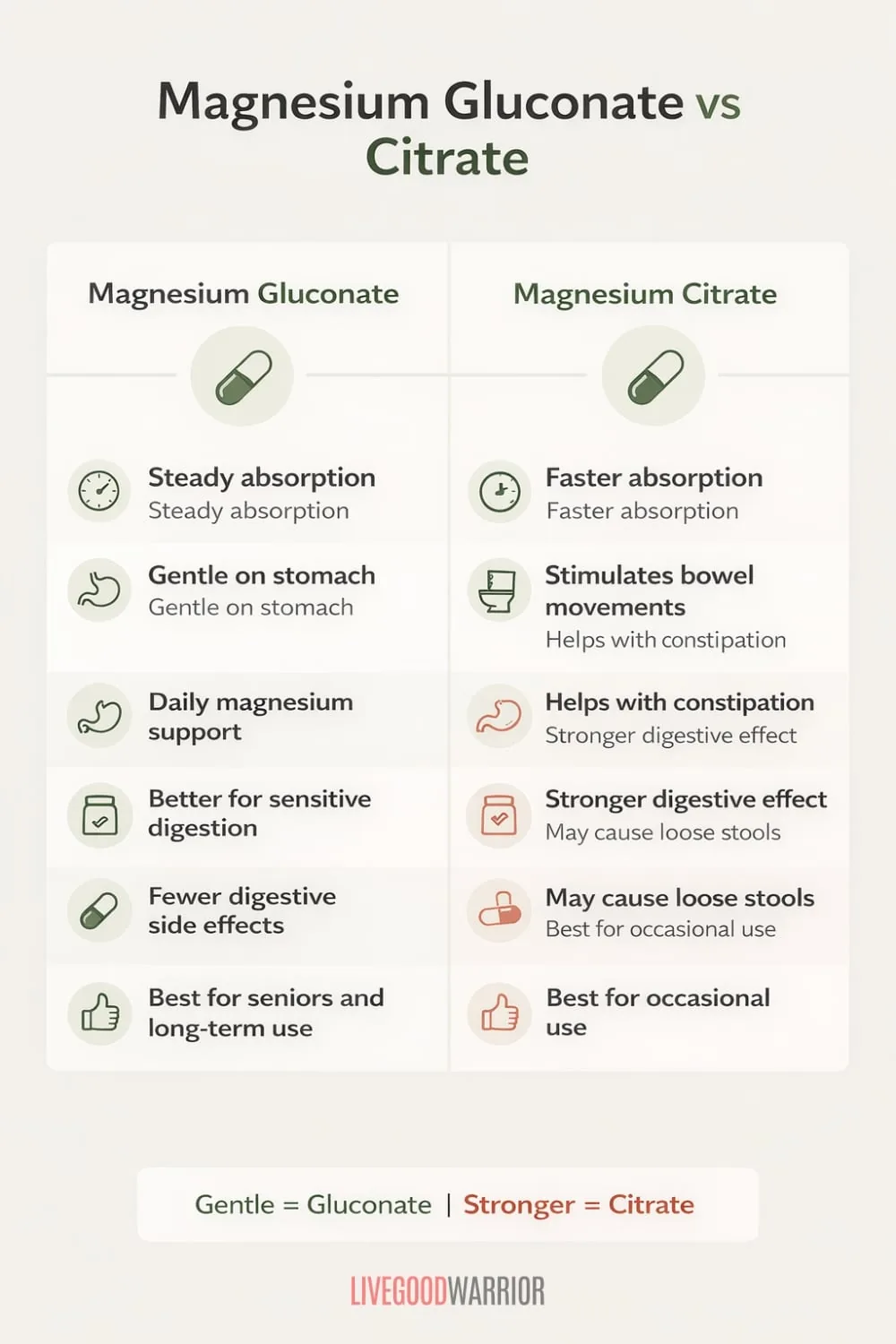
Side by Side Overview
- Absorption speed
- Gluconate: Steady absorption, well-suited for regular daily use.
- Citrate: Absorbs faster and is often felt more quickly.
- Digestive effects
- Gluconate: Generally gentle on the stomach and less likely to cause loose stools.
- Citrate: Stimulates the bowels more and is more likely to cause soft or loose stools, especially at higher doses.
- Common uses
- Gluconate: Daily magnesium support, mild muscle tightness, general wellness, and support for sleep and relaxation without major bowel changes.
- Citrate: Occasional constipation, “keeping things moving,” and faster relief when bowels are sluggish.
- Gentleness
- Gluconate: Often better tolerated by seniors and people with sensitive digestion or a tendency toward loose stools.
- Citrate: Can feel too strong for those with irritable or sensitive digestion, especially if the starting dose is high.
- Typical side effects
- Gluconate: Occasional mild stomach upset, especially at higher doses or on an empty stomach.
- Citrate: Loose stools, cramping, and urgent bowel movements if the dose exceeds tolerance.
- Who it usually suits best
- Gluconate: Older adults, people with digestive sensitivity, or those on multiple medications who want a calmer daily option.
- Citrate: Adults focused on constipation relief who are comfortable with stronger bowel effects and want quicker results.
Plain English takeaway
Think “gentle and steady” for magnesium gluconate and “stronger and faster on the bowels” for magnesium citrate. If your priority is comfort and everyday support, gluconate usually fits better. If your priority is getting your bowels moving, citrate often works more directly, as long as your stomach can handle it.
What Is Magnesium Gluconate?
Magnesium gluconate is a form of magnesium attached to gluconic acid, a compound that helps your body handle the mineral more gently. In simple terms, it is a type of magnesium that tends to sit comfortably in the stomach and is often used for steady, everyday support.
How Magnesium Gluconate Is Commonly Used
People usually choose magnesium gluconate when they want regular magnesium without a strong effect on their bowels. It is often used for:
- General daily magnesium support, when bloodwork or symptoms suggest you may not be getting enough.
- Mild muscle tightness or occasional cramps, especially in the legs or feet.
- Calming and sleep support, often as part of an evening routine.
- Overall wellness, for those who want magnesium but are sensitive to stronger laxative effects.
Key idea
Think of magnesium gluconate as a slower, calmer source of magnesium that focuses more on comfort than on rapid bowel changes.
Why Magnesium Gluconate Is Considered Gentler
Compared with many other forms, magnesium gluconate is often easier on the stomach. For many people, it is:
- Less likely to cause loose stools at typical daily doses.
- More comfortable on an empty or semi-empty stomach for those who tend to feel queasy.
- More predictable, without the sudden shift from “no effect” to urgent bathroom trips seen with stronger laxative forms.
Who Might Prefer Magnesium Gluconate
Magnesium gluconate can be a smart first choice if you see yourself in any of these groups:
- Seniors who want magnesium support without disrupting digestion, especially if taking multiple medications.
- People with sensitive digestion, including those prone to loose stools, gas, or cramping from supplements.
- Anyone focused on long-term use who wants something they can tolerate daily.
- Budget and safety-conscious buyers who prefer starting with a gentler option before trying stronger forms.
Plain English takeaway
If you want gentle, steady magnesium that supports your body without upsetting your digestion, magnesium gluconate is often the most comfortable place to start.
What Is Magnesium Citrate?

Magnesium citrate is magnesium combined with citric acid. In practical terms, it is a form of magnesium that your body absorbs relatively quickly and that pulls water into the intestines, which is why it is well known for helping with constipation.
How Magnesium Citrate Works In Your Body
Compared with many other forms, magnesium citrate tends to:
- Absorb relatively fast, so some people feel its effects sooner, especially for muscle relaxation or bedtime use.
- Draw water into the bowel to soften stool and help it move along.
- Stimulate bowel movements, especially at higher doses, which is why it is often used for short-term relief of constipation.
This is why many people consider magnesium citrate a “dual purpose” option. It can help raise magnesium levels and encourage more regular bowel movements.
Why People Choose Magnesium Citrate
Some people prefer magnesium citrate for quicker or more targeted results. Common reasons include:
- Occasional constipation, especially if you feel backed up, heavy, or uncomfortable.
- Sluggish digestion, when you want something that helps keep things moving.
- Faster relief for issues like tight muscles or difficulty winding down at night.
What this means for you
If your main priority is relief from constipation or you want to feel a noticeable effect sooner, magnesium citrate is often a better choice than magnesium gluconate. It is not usually the first choice for sensitive digestion, but for many people, it provides clear, noticeable results when bowel regularity is the goal.
Who Should Be More Cautious With Citrate
Because magnesium citrate has a stronger effect in the gut, it can cause loose stools or urgent bathroom trips if the dose is too high. You may want to be cautious or speak with a healthcare provider first if you:
- Already have frequent loose stools or diarrhea.
- Have a history of irritable or easily upset digestion.
- Take several medications and want to avoid sudden changes in bowel habits.
Plain English takeaway
Think of magnesium citrate as a faster-acting, more “active in the gut” form of magnesium. It is especially useful when constipation is the main concern, as long as your digestion can tolerate it.
Key Differences Between Magnesium Gluconate And Citrate
Magnesium gluconate and magnesium citrate both supply magnesium, but they behave differently in your body. The main differences come down to how quickly they act, how they affect your digestion, and how comfortable they are in your stomach.
Absorption: Steady Vs Faster
Magnesium gluconate provides steady, comfortable absorption. It usually raises magnesium levels without a sharp effect on your gut, making it well-suited for daily use and long-term support.
Magnesium citrate tends to absorb faster, so many people feel its effects sooner, especially for muscle relaxation or bedtime use. That faster action often comes with a stronger pull of water into the intestines, which helps with constipation but can be too much for some people.
What this means for you: If you want calm, steady support, gluconate usually feels smoother. If you want to see results sooner, especially in your digestion, citrate is more likely to deliver them.
Digestive Effects And Tolerance
Gluconate is typically gentler on the stomach and bowels. At common daily doses, it is less likely to cause urgent bathroom trips. Many seniors and people with sensitive digestion tolerate it well, especially when taken with food.
Citrate has stronger digestive effects. It draws more water into the intestines and stimulates bowel movement, which is why it is often used to treat constipation. The trade-off is a higher chance of loose stools, cramping, or urgency if the dose is too high.
Who tends to tolerate which better:
- More likely to do well with gluconate: Seniors, people with a history of loose stools, sensitive or irritable digestion, or anyone wanting long-term use with minimal bowel changes.
- More likely to choose citrate carefully: Adults who feel constipated or “backed up” and are comfortable with a stronger bowel effect, as long as they start low and adjust gradually.
Side Effects You Might Notice

With magnesium gluconate, side effects are usually mild and may include slight stomach discomfort if taken in large doses or on an empty stomach. Loose stools are less common but can still occur at higher doses.
With magnesium citrate, side effects are usually digestive. You may notice softer stools, gas, cramping, or an urgent need to go. For some people, this is helpful; for others, it is something to avoid.
Plain English takeaway
If you picture “gentle, daily, and calm,” you are thinking: magnesium gluconate. If you picture “quicker, stronger, and more active in the gut,” you are thinking: magnesium citrate. Your choice should match how sensitive your digestion is and whether you want steady support or more noticeable bowel effects.
Best For… How To Match Magnesium Gluconate Or Citrate To Your Situation
This is where things get practical. Instead of asking which form is “best” in general, match the form to your goal and your digestion. Use these common situations as a guide.
Best For Gentle Daily Magnesium Support
Best choice: Magnesium gluconate
Magnesium gluconate usually fits best if you:
- Want steady magnesium support for general wellness, sleep, or mild muscle tension.
- Prefer something you can take most days without worrying about sudden bathroom trips.
- Have tried other forms that upset your stomach and want a calmer option.
What this feels like in real life: You take a regular dose, usually with food, and notice gradual benefits over time without major changes in your bowel habits.
Best For Occasional Constipation Relief
Best choice: Magnesium citrate
Magnesium citrate is often the better fit if you:
- Feel backed up or go less often than feels comfortable.
- Want a magnesium supplement that also helps keep your bowels moving.
- Are willing to accept softer stools or more frequent bathroom trips in exchange for relief.
What this feels like in real life: You notice more bowel movement activity, often within a relatively short time, especially if you were constipated before.
Best For Seniors Who Prioritize Digestion And Medication Safety
Best choice: Magnesium gluconate for most seniors
Magnesium gluconate usually makes more sense if you:
- Take several medications and want to avoid sudden diarrhea or dehydration.
- Already have sensitive digestion or a history of loose stools.
- Want long-term magnesium support that feels predictable and easy to manage.
When citrate might still be used: Some seniors use magnesium citrate cautiously for constipation, typically at lower doses and under a healthcare provider's guidance. This is typically an “as needed” approach rather than daily use.
Best For Budget-Conscious Buyers Who Want To Avoid Waste
Best first step: Start with magnesium gluconate if your goal is daily support, or magnesium citrate if your goal is relief from constipation.
To avoid buying the wrong product:
- Pick one clear main goal, either gentle daily support or bowel regularity.
- Match the form to that goal instead of choosing a “do everything” supplement.
- Start with the lowest reasonable dose and adjust gradually based on how you feel.
Plain English takeaway
Use magnesium gluconate for calm, daily support. Use magnesium citrate when you want more active help with constipation. Your age, digestion, and main symptom should guide your choice.
When To Choose Magnesium Gluconate Vs Magnesium Citrate
You do not need to become a supplement expert to choose well. If you focus on your main goal, your digestion, and how cautious you want to be, the choice between magnesium gluconate and citrate becomes much clearer.
Start With Your Main Goal
Ask yourself one simple question: “What do I want this magnesium to do first?”
- If your top goal is gentle daily support for sleep, stress, cramps, or general wellness, lean toward magnesium gluconate.
- If your top goal is bowel regularity or constipation relief, lean toward magnesium citrate.
If you try to cover multiple goals with one product, you are more likely to feel confused or disappointed. Start by choosing the form that fits your most important need.
Consider How Sensitive Your Digestion Is
- If you have loose stools, IBS-type symptoms, or a sensitive gut, gluconate is usually the safer starting point.
- If you tend to feel constipated or have slow bowel movements, citrate often better matches your needs.
A plain rule of thumb: The more sensitive your digestion, the more sense gluconate makes as a first step. The more backed up you feel, the more worth trying citrate at a modest dose.
Think About How Cautious You Want To Be
- If you take multiple medications, are older, or want to avoid unexpected digestive effects, choose magnesium gluconate and introduce it gradually.
- If you are comfortable with a stronger bowel effect and your main goal is relief from constipation, choose magnesium citrate and start low.
When in doubt, you can start with gluconate for a few weeks, then decide whether you still need citrate for additional support. Many people do well with just one form that matches their primary concern.
How To Make A Confident Choice
- Pick your main goal (gentle daily support or constipation relief).
- Match the form: gluconate for gentle support, citrate for more active bowel effects.
- Consider your digestion and choose the calmer option if you are sensitive.
- Start with a small dose, allow time to assess, and adjust based on how you feel.
You are not looking for a “perfect” magnesium.
You are looking for the form that fits your body, your digestion, and your main goal right now. Once you see it this way, magnesium gluconate and citrate become simple tools you can use with confidence.
Simple Final Recommendation

You do not need a perfect magnesium for every situation. You need the form that fits your body, your digestion, and your main goal.
If your priority is gentle, steady support for sleep, stress, or general wellness, and you want to protect your digestion, magnesium gluconate is usually the better fit. It is typically easier on the stomach, more suitable for long-term use, and a comfortable option for seniors, people on multiple medications, and anyone who wants to avoid strong laxative effects.
If your priority is constipation relief or more active support for bowel movements, and you are willing to accept looser stools in exchange for relief, magnesium citrate often makes more sense. It acts more quickly in the gut and is better suited to situations where you need things to move.
Let your body, not the bottle, decide
- Start with the form that matches your main goal.
- Begin with a modest dose, ideally taken with food.
- Pay attention to how your stomach and bowels respond over several days.
If you feel gassy, crampy, or rushed to the bathroom on citrate, that is useful feedback. Your body may prefer gluconate or a lower dose. If gluconate feels too subtle and constipation is still an issue, you can try citrate carefully or use it as needed.
If you prefer a simple option without having to choose between different forms, you can explore the LiveGood Ultra Magnesium Complex as a balanced daily magnesium supplement.
The key idea
Your personal response, your main symptom, and your digestive comfort matter more than any marketing claim. When you match the form to your goal and pay attention to how your body responds, choosing between magnesium gluconate and citrate becomes straightforward and practical.
Magnesium Gluconate Vs Citrate: Short FAQ
Which magnesium is better for constipation?
Magnesium citrate is usually better for constipation. It pulls more water into the intestines and stimulates movement, making it more effective if you feel backed up. Magnesium gluconate can support regularity over time, but it is not as direct or as fast-acting for relief of constipation.
Is magnesium gluconate gentler than citrate?
Yes, magnesium gluconate is generally gentler on the digestive system. Most people find it easier on the stomach and less likely to cause loose stools at typical daily doses. Magnesium citrate has a stronger effect in the gut, which helps with constipation, but it can feel too intense for sensitive digestion.
Can I take magnesium citrate if I have sensitive digestion?
You can, but it requires caution. If you have a history of loose stools, cramping, or irritable digestion, magnesium citrate may feel too strong, especially at higher doses. If you try it, start with a small amount, take it with food, and monitor your response. If your digestion is very sensitive, magnesium gluconate is usually a better starting point.
How quickly do magnesium gluconate and citrate work?
Magnesium citrate typically works faster, especially for bowel movements. Many people notice changes in stool softness and frequency relatively quickly, particularly if they were constipated.
Magnesium gluconate works more gradually. Its effects are usually noticed over time, such as improved relaxation, fewer cramps, or better sleep, rather than immediate digestive changes. For many people, this slower, steadier effect is better suited to daily use.
Magnesium gluconate vs citrate: your choice comes down to whether you need short-term digestive relief or long-term, steady support your body can tolerate day after day.
0 Comments