
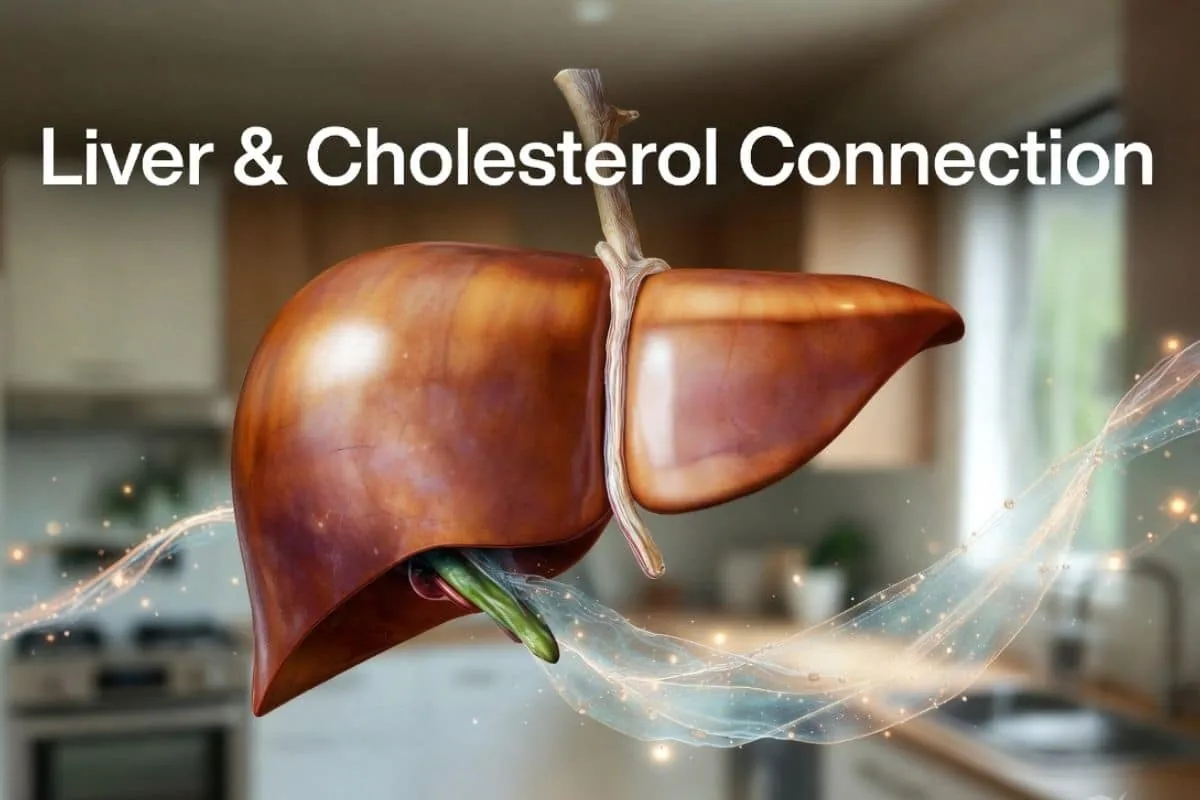
The liver and cholesterol connection plays a bigger role in your health than most people realize.
When people talk about cholesterol, they usually think about the heart. But cholesterol does not move or manage itself. Your liver is the organ that produces it, processes it, and maintains its balance.
When this system works well, cholesterol levels stay steady. When it does not, problems can build up over time without obvious signs.
Understanding how your liver controls cholesterol helps you see what is really going on. It shows why cholesterol levels can rise and why taking care of your liver matters for your long-term health.
The Liver and Cholesterol Connection
The liver-cholesterol connection is simple once you see how the system works.
Your liver controls how cholesterol is made, used, and removed, which is why balance starts here.
How the Liver Produces and Processes Cholesterol
The liver produces cholesterol and transports it through the bloodstream using lipoproteins.
Cholesterol is essential for the body. It supports hormone production, helps create vitamin D, and maintains the structure of your cells.
After it has been used, excess cholesterol returns to the liver. There, it is processed and removed from the body through bile.
As long as the liver performs this role properly, cholesterol levels can stay balanced and support heart health.
How The Liver Keeps Cholesterol Under Control
The liver and cholesterol connection works through a continuous cycle of movement and balance.
HDL and LDL are the two main types involved in transporting cholesterol through your body.
HDL's Role – Returning Cholesterol to the Liver
HDL, often called “good cholesterol,” collects excess cholesterol from cells throughout the body and transports it back to the liver.
Once it returns to the liver, the cholesterol is broken down and removed from the body.
Your good cholesterol, the HDL, acts as a scavenger in the bloodstream. Its primary function is to collect excess cholesterol from cells throughout the body and transport it back to the liver. Once returned to the liver, cholesterol is broken down and eliminated from the body.
LDL's Role – Transporting Cholesterol to Cells
LDL, often called “bad cholesterol,” carries cholesterol from the liver to your cells.
This cholesterol is needed for hormone and vitamin D production and for maintaining healthy cell structure.
Problems begin when there is too much LDL or when the balance between HDL and LDL is off.
This imbalance can lead to cholesterol buildup in the arteries, increasing the risk of atherosclerosis and cardiovascular problems.
Liver Problems Can Affect Cholesterol Levels

The liver and cholesterol connection works both ways.
Just as cholesterol levels can affect your liver, problems with the liver can also disrupt your cholesterol balance.
Fatty Liver Disease
Fatty liver disease happens when too much fat builds up in the liver cells. This can interfere with normal liver function.
When the liver is not working properly, it cannot break down and remove cholesterol and fats efficiently.
There are two main types. Alcohol-related fatty liver is often reversible if alcohol intake stops. Nonalcoholic fatty liver disease (NAFLD) is more common in people with obesity and diabetes.
In some cases, NAFLD can progress to a more serious condition called NASH, which can lead to cirrhosis, liver failure, or liver cancer.
Fatty liver is often linked to diet, weight changes, and metabolic stress.
If you want to understand how rapid changes can affect your liver, read more about rapid weight loss and fatty liver.
Cirrhosis
Cirrhosis is scarring of the liver caused by long-term damage, such as hepatitis C or heavy alcohol use.
This damage impairs the liver’s ability to perform important functions, including regulating cholesterol.
It can lead to lower HDL levels, higher LDL levels, and higher triglyceride levels.
Viral Hepatitis
Viral hepatitis causes inflammation in the liver and can damage liver cells.
This damage can raise LDL levels and reduce the liver’s ability to produce HDL.
As a result, the body becomes less effective at breaking down and removing excess cholesterol.
Liver Damage From Drugs and Medications
The liver processes many substances, including medications.
Taking too much or using certain drugs over time can damage the liver. In many cases, this damage improves once the medication is stopped, but in some cases it can be serious or permanent.
Regular monitoring and proper medical guidance help reduce the risk of long-term liver damage.
Natural Tips for Maintaining a Healthy Liver and Cholesterol Levels
The liver and cholesterol connection can be supported through simple daily habits.
Small, consistent changes can help your body manage cholesterol more effectively while protecting your liver.
Before making changes, it helps to understand the basics, including common myths and facts about cholesterol.
Regular Aerobic Exercises
Regular aerobic exercise helps burn calories, reduce body fat, and support overall fitness.
It can also improve your cholesterol balance by increasing HDL and lowering LDL levels.
Balanced Diet
A balanced diet supports both liver health and cholesterol control.
Focus on whole foods such as fruits, vegetables, and grains. Increase fiber intake, reduce excess carbohydrates, and limit alcohol.
Avoid foods high in fat, sugar, and salt to reduce strain on your liver.
If your routine already covers the basics but you want additional support, consider anti-inflammatory support to help maintain balance.
In Summary

The liver plays a central role in managing cholesterol levels in your body.
Supporting your liver through regular exercise and a balanced diet helps keep cholesterol in check.
Understanding the liver and cholesterol connection gives you a clearer path to maintaining your long-term health.
If you want direct support at the source, consider a liver support supplement with milk thistle to help your liver function more efficiently.
0 Comments