
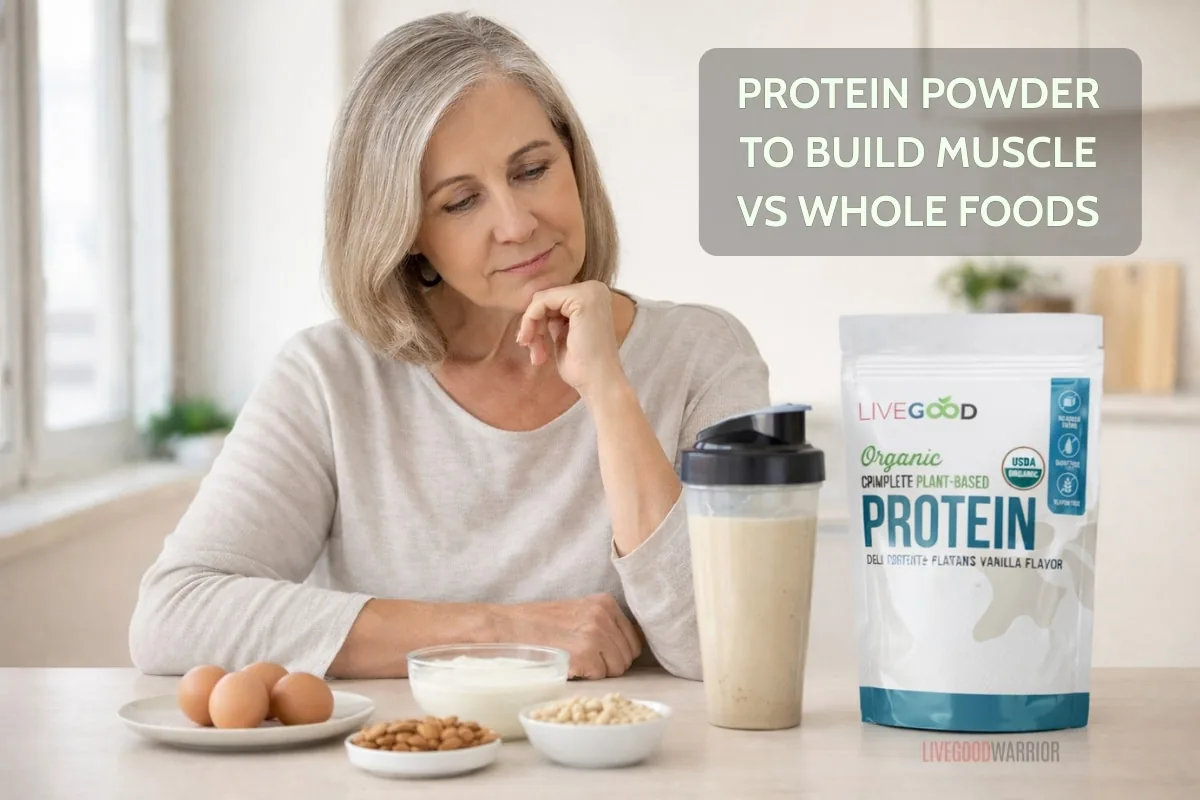
Protein powder to build muscle is optional, not mandatory. Your muscles care about one main thing: steady protein coming in each day so they can repair and grow after activity.
How Muscle Building Really Works
When you walk, lift, garden, or do chores, you create tiny amounts of muscle damage. Protein provides the building blocks (amino acids) your body uses to repair that damage. This is why protein powder for building muscle is often discussed, but the process itself depends on total daily protein intake rather than the source. With enough protein and regular movement, those repairs make your muscles a little stronger over time.
This aligns with research from the International Society of Sports Nutrition, which emphasizes total daily protein intake as a key factor in muscle development.
Where Your Protein Can Come From
You do not have to use protein powder if you prefer real food. Your daily protein can come from:
- Animal foods such as eggs, chicken, turkey, fish, beef, or yogurt
- Plant foods such as beans, lentils, tofu, tempeh, nuts, and seeds
- Combination meals such as chili, stir fries, omelets, and burrito bowls
What this means for you?
If you can reach your daily protein target with meals and snacks, you already have what your muscles need. Even when people search for protein powder to build muscle, what really matters is consistently meeting their daily protein intake. Protein powder, including plant-based protein powder or something more specialized like chocolate whey protein isolate with colostrum, is just a tool some people use for convenience, not a requirement.
If you want a broader view of how nutrients support strength and energy, you may also appreciate this guide on the benefits of magnesium in the human body, since minerals work alongside protein in muscle function.
Who Actually Benefits From Protein Powder?
You only need to think about protein powder if getting enough protein from regular meals feels hard or stressful. For many people, food alone works just fine. For others, especially those looking to use protein powder to build muscle, a simple shake can eliminate one more daily headache without adding complexity.
When Protein Powder Makes Sense
- Your appetite is low, especially in the morning or after exercise, and a small shake is easier than a full meal.
- You are busy and short on time, juggling work, kids, or caregiving, and you often skip meals or “grab whatever” instead of a protein source.
- You avoid or limit animal foods, and a plant-based protein powder helps you reach a steady daily protein target without overthinking every meal.
- You are watching your budget, and a simple tub of protein works out cheaper per serving of protein than constant takeout or specialty snacks.
- You want a predictable habit, such as one scoop in water, milk, or a smoothie, right after a workout.
Some people like a basic plant-based protein powder, others prefer something more specific, like chocolate whey protein isolate with colostrum. For those specifically considering protein powder to build muscle, these situations are where it becomes a practical tool rather than a necessity. The right choice depends on your digestion, taste, and price range. If you already feel confused by supplement marketing, you might also appreciate this guide on how to spot a bitter pill in the supplement market before you spend more money than you need to.
Whole Food Alternatives To Protein Powder
You can absolutely support muscle with regular food, even if you never buy a tub of protein powder. Even if you are considering protein powder to build muscle, it is not required if your meals already cover your protein needs. The goal is simple: include a solid protein source in most meals and at least one snack.

Affordable Protein Options From Your Kitchen
- Eggs scrambled, boiled, or in an omelet with veggies.
- Chicken, turkey, or canned tuna added to salads, wraps, or soups.
- Greek or strained yogurt with fruit and a small handful of nuts.
- Beans and lentils in chili, burrito bowls, or simple rice and beans.
- Tofu or tempeh in stir fries or baked and added to grain bowls.
- Peanut butter or nut butter on toast, apples, or oatmeal.
These everyday foods can fully replace protein powder for building muscle if you include them consistently throughout your meals.
Simple Meal Ideas For Different Lifestyles
- On a tight budget, focus on eggs, dry beans, lentils, and canned fish.
- Busy and tired at night, use rotisserie chicken, canned beans, or pre-cooked frozen shrimp to build quick plates.
- Lower appetite or smaller meals: lean on yogurt, eggs, and nut butter to get more protein in small portions.
What does this mean for you?
If you plan a protein food first, then add vegetables and starch, your muscles get what they need without relying on powders. Even if you are thinking about protein powder to build muscle, simple meals like these can cover your needs without extra supplements. If you like building simple, flexible meals, you might also find a flexitarian approach helpful in this guide to flexitarian eating for health and weight goals.
How To Decide If Protein Powder Fits Your Life
You do not have to guess about protein powder. If you are considering protein powder to build muscle, a few clear questions can show you if it actually helps you or just drains your budget and pantry space.
Step 1: Check Your Real Need
- Are you regularly short on protein? Think about a typical day. Do most meals include a clear protein source, or do you often rely on toast, cereal, snacks, and coffee?
- Do you skip meals or eat on the run? If yes, a scoop in water or milk might be a practical backup, not a necessity.
- Is your goal muscle gain, weight loss, or simple maintenance? If your focus is on protein powder to build muscle, your daily protein target matters more than whether it comes from food or shakes.
Step 2: Protect Your Budget
- Decide what you can spend per month before you shop.
- Compare the cost per serving of protein, not just the price of the tub.
- Ask yourself, “Would basic foods like eggs, beans, or yogurt give me the same protein for less?”
If you are considering protein powder to build muscle, this step keeps you from overspending on convenience when cheaper food options can do the same job.
Step 3: Read The Label With A Cool Head
- Ignore hype words and focus on protein per serving, the ingredient list, and added sugars.
- Choose a short, readable ingredient list you recognize.
- If long health promises make you uneasy, you might appreciate this guide on how to spot a hidden hunger pattern in your own diet before buying more powders.
What this means for you?
If a protein powder clearly solves a problem in your day, fits your budget, and has a straightforward label, it may be worth it. Even when evaluating protein powder for muscle building, clarity and simplicity matter more than marketing claims. If not, your money is likely better spent on simple, protein-rich foods.
Summary And Practical Recommendations

You can build and maintain muscle without protein powder. What your muscles really need is enough total protein each day, regular movement, and habits you can afford to keep up.
Key takeaways
- Protein powder is optional, not a requirement for muscle growth.
- Whole foods like eggs, beans, yogurt, chicken, fish, tofu, and lentils can fully cover your needs.
- Protein powder, including plant-based protein powder or chocolate whey protein isolate with colostrum, is mainly about convenience.
- The best choice is the one that fits your digestion, schedule, and budget without stress.
What to choose
- Skip protein powder if your meals already include solid protein, your budget is tight, or you simply prefer to eat your calories.
- Use protein powder if you often miss protein at meals, have a low appetite, eat on the go, or want a simple backup option to keep you on track.
What this means for you?
You do not need to chase every new tub on the shelf. Start with your real life. If food covers your protein and your wallet feels better, stay there. If you decide that convenience matters and you are specifically considering protein powder to build muscle, a simple plant-based protein powder can be a practical, consistent option without overcomplicating your routine.
Protein powder to build muscle works best when it supports consistency, not when it replaces solid habits. If a simple powder removes friction and helps you stay consistent, that is a valid choice too. If you are also thinking about broader nutrient support, you may find this guide on essential vitamins and minerals for bone health a helpful next step.
0 Comments