

Quality Sleep: Why It Matters and How to Improve It
Some nights you sleep for hours and still wake up feeling like your body never really rested.
The alarm rings, but the brain feels slow.
Simple tasks take more effort than they should.
By the afternoon, energy drops, and concentration becomes harder.
For others, the night itself feels unsettled.
You fall asleep, but wake up several times.
Or you wake in the morning with the strange feeling that the night passed, but true rest never happened.
I know this feeling very well. Some nights I sleep only two hours and spend the next day moving through it like a zombie. Because of that, the subject of quality sleep is very personal to me.
These experiences often point to a problem with quality sleep, not simply the number of hours spent in bed.
Sleep is not a passive state where the body shuts down. During the night, the brain and body move through several stages of sleep that support recovery and repair.
When this process works properly, sleep becomes restorative. When it is disrupted, the body may struggle to fully recover overnight.
What Is Quality Sleep?
Quality sleep refers to how effectively the body moves through the natural stages of sleep during the night.
Good sleep usually includes:
- Falling asleep within 15–20 minutes
- Sleeping through most of the night with minimal waking
- Reaching deep sleep and REM sleep
- Waking feeling reasonably refreshed
In other words, sleep quality describes how restorative sleep actually is, not simply how long it lasts.
Why Quality Sleep Matters
Sleep supports many essential biological functions.
Brain Function
During sleep, the brain processes memories and clears metabolic waste that builds up during waking hours.
Metabolism
Sleep helps regulate hormones involved in appetite and energy balance.
Immune System
Sleep strengthens immune responses and helps the body fight infections.
Mood Regulation
Healthy sleep supports emotional balance and stress resilience.
Long-Term Health
Chronic poor sleep has been associated with increased risk of cardiovascular disease, metabolic disorders, and mental health conditions.
What Is Quality Sleep?
Quality sleep refers to how well the body moves through the natural stages of sleep during the night. It is not only about how long you sleep, but how restorative that sleep actually is.
Researchers and sleep specialists generally describe good sleep using several measurable characteristics.
Good sleep typically includes:
- Falling asleep within about 15–20 minutes after going to bed
- Sleeping through most of the night with minimal awakenings
- Spending enough time in the normal sleep stages, including deep sleep and REM sleep
- Waking up feeling reasonably refreshed and alert
These factors help determine whether sleep is actually restorative.
Sleep duration still matters. Most adults need about 7 to 9 hours of sleep per night to support normal physical and mental functioning. However, the quality of those hours is just as important as the total amount of time spent in bed.
Someone may sleep for eight hours but still feel exhausted if sleep is frequently interrupted or if the deeper stages of sleep are limited.
The Science of Sleep Cycles
Sleep may feel simple, but it is actually a structured biological process. During the night, the body moves through repeating stages of sleep that help the brain and body recover.
Two systems play a major role in controlling sleep.
The first is the circadian rhythm, often called the body clock. This internal timing system responds mainly to light and darkness and helps regulate when the body feels alert or sleepy.
The second involves sleep-regulating centres in the brain, particularly in the hypothalamus. These areas coordinate signals that control sleep timing, hormone release, and transitions between sleep stages.
During the night, sleep follows repeating cycles that last about 90 minutes. A typical night includes several of these cycles, moving through different stages of sleep that together support quality sleep.
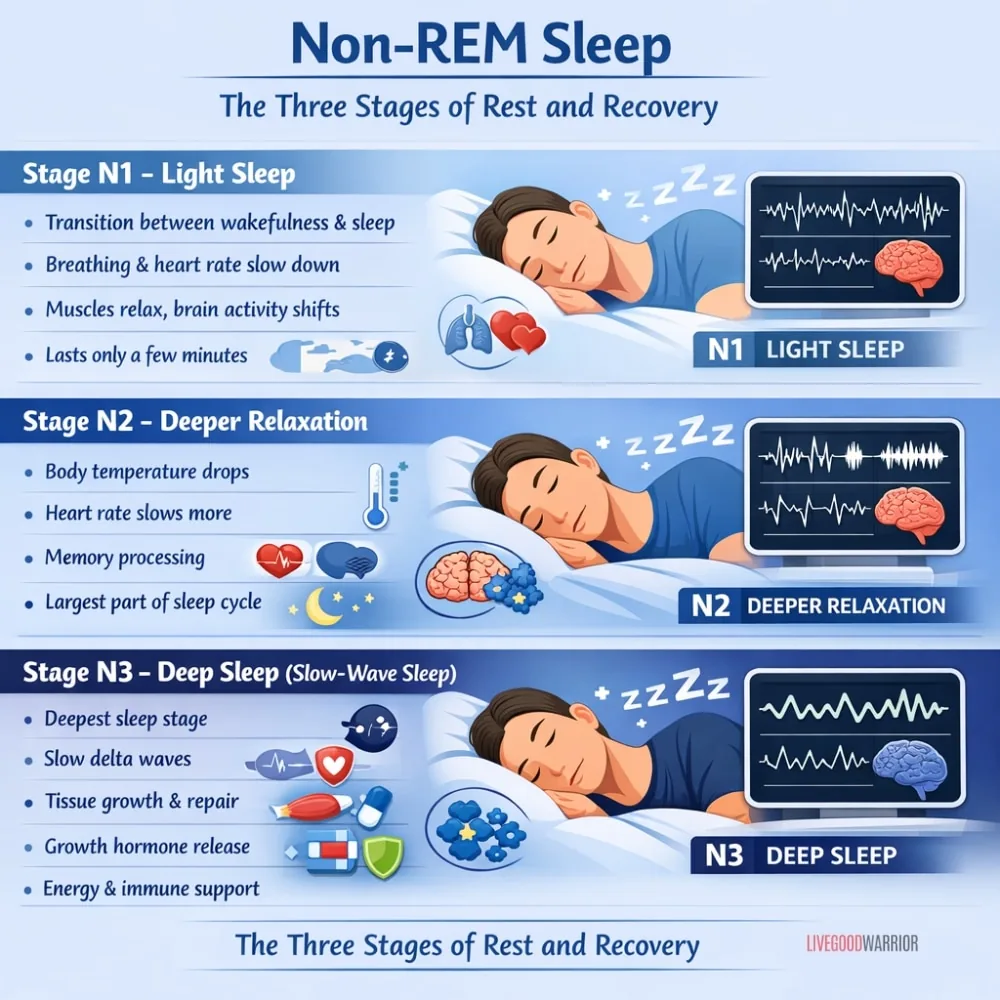
Non-REM Sleep
Non-REM sleep includes three stages that progress from light sleep to deep, restorative sleep.
Stage N1 – Light sleep
- The transition between wakefulness and sleep
- Breathing and heart rate begin to slow
- Muscles relax, and brain activity starts to change
- This stage usually lasts only a few minutes
Stage N2 – Deeper relaxation
- Body temperature drops
- Heart rate slows further
- Brain activity shows specific patterns linked to memory processing
- This stage makes up the largest portion of total sleep time
Stage N3 – Deep sleep (slow-wave sleep)
- The deepest stage of sleep
- Brain waves slow significantly
- Physical repair and tissue recovery occur
- Growth hormone is released during this stage
- The body restores energy and supports immune function
Deep sleep is especially important for physical restoration and plays a central role in achieving quality sleep.
REM Sleep
REM stands for Rapid Eye Movement sleep.
This stage differs from non-REM sleep and plays an important role in brain function.
Key features of REM sleep include:
- Most vivid dreaming occurs during this stage
- The brain becomes more active while the body remains relaxed
- Memory processing and learning are supported
- Emotional experiences are integrated and regulated
REM sleep typically appears about 90 minutes after falling asleep and becomes longer during later sleep cycles.
Together, these repeating cycles of non-REM and REM sleep allow the body and brain to recover. When sleep is frequently interrupted, these cycles can be disrupted, reducing their restorative benefits.
Why Quality Sleep Is Essential for Health

Sleep is not simply a period of rest. During the night, the body performs several important biological processes that support physical and mental health.
When quality sleep is consistent, these systems tend to function more efficiently. When sleep becomes disrupted or insufficient, many areas of health can be affected.
Brain Function and Memory
Sleep plays an important role in how the brain processes and stores information.
During sleep:
- The brain consolidates memories, helping convert short-term memories into longer-term storage
- Neural connections involved in learning and problem-solving are strengthened
- The brain clears certain metabolic waste products that accumulate during waking hours
REM sleep appears to be particularly important for memory processing and cognitive function.
When sleep quality declines, people often notice difficulties with concentration, attention, and mental clarity.
Hormone Balance
Sleep influences several hormones that regulate daily biological rhythms.
Key examples include:
- Melatonin, which helps regulate sleep timing and signals the body that it is time to sleep
- Cortisol, a hormone that follows a daily rhythm and helps regulate alertness and stress responses
- Growth hormone, which is primarily released during deep sleep, supports tissue repair and recovery
Disruptions in sleep can alter these hormonal rhythms.
Metabolism and Weight Regulation
Sleep is closely connected to the hormones that influence appetite and energy balance, which is one reason quality sleep plays an important role in metabolic health.
Research has shown that sleep restriction may:
- Increase levels of ghrelin, a hormone that stimulates hunger
- Reduce levels of leptin, which signals fullness
- Affects how the body regulates blood sugar and energy use
Over time, poor sleep has been associated with a higher risk of weight gain and metabolic disorders.
Immune System Support
The immune system is also influenced by sleep.
During sleep:
- The body produces and releases proteins called cytokines, which help regulate immune responses
- Certain immune cells become more active in identifying and responding to pathogens
Studies have found that individuals who regularly sleep fewer hours may have a higher susceptibility to infections.
Mental Health
Sleep and mental health are closely connected, and consistent quality sleep plays an important role in emotional stability.
Poor sleep has been associated with increased risk of:
- Anxiety symptoms
- Depressive symptoms
- Mood instability and irritability
Sleep disturbances are common in many mental health conditions, and improving sleep quality can often support emotional well-being.
How Much Sleep People Actually Need
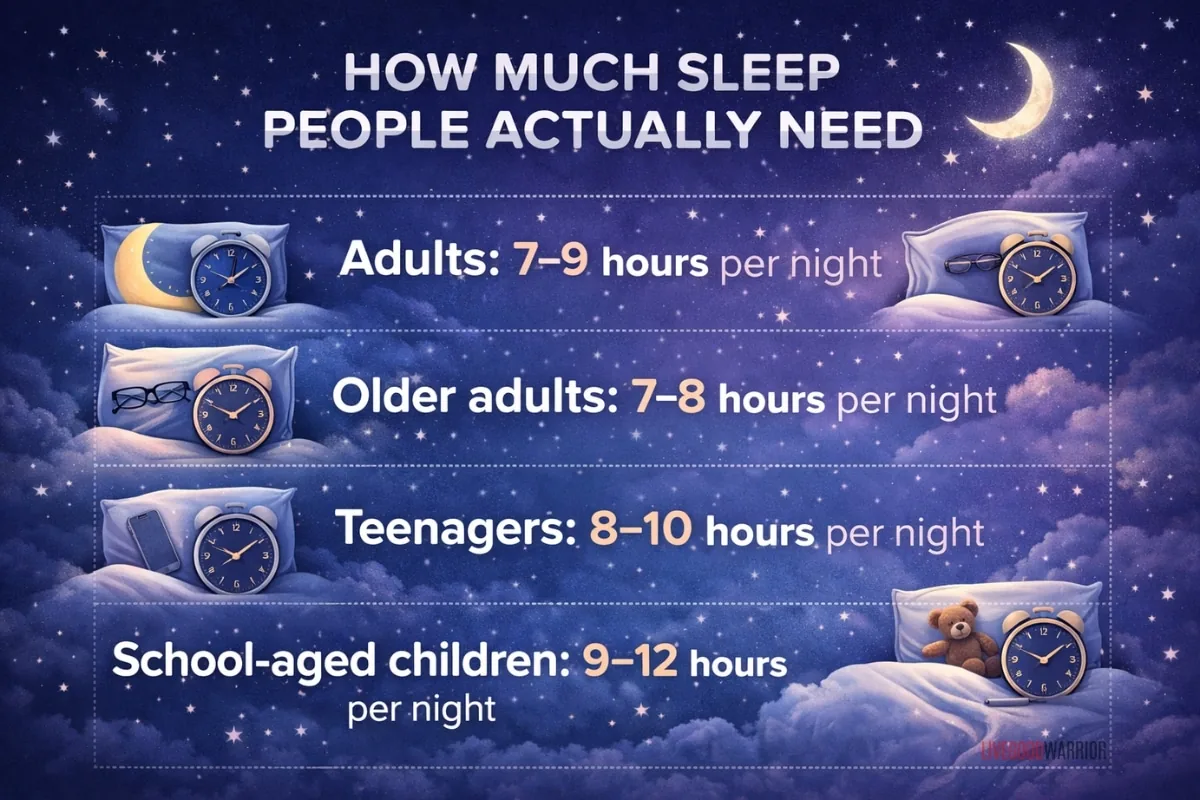
Sleep needs change throughout life. Age, lifestyle, and overall health can all influence how much sleep a person requires.
Sleep researchers and organisations such as the National Sleep Foundation have developed general recommendations based on large population studies. These guidelines provide a useful starting point.
Typical recommendations include:
- Adults: 7–9 hours per night
- Older adults: 7–8 hours per night
- Teenagers: 8–10 hours per night
- School-aged children: 9–12 hours per night
These ranges reflect the amount of sleep that supports normal physical and mental functioning for most people.
However, individual needs can vary. Some people naturally feel well-rested with slightly less sleep, while others function better at the higher end of the recommended range.
What matters most is not only the number of hours slept, but whether sleep is restorative. Someone may sleep for eight hours but still feel tired if sleep is frequently interrupted or if the deeper stages of sleep are limited.
For this reason, both sleep duration and quality sleep play important roles in maintaining overall health.
Signs You Are Not Getting Quality Sleep
Sleep problems are not always obvious. Many people assume they are simply busy, stressed, or getting older when the real issue may be poor quality sleep.
Several common signs can suggest that sleep is not fully restorative.
These include:
- Daytime fatigue even after what seems like a full night of sleep
- Difficulty concentrating or staying mentally focused
- Irritability or mood swings that appear without a clear reason
- Frequent awakenings during the night
- Falling asleep easily during the day, such as while watching television or sitting quietly
- Regular reliance on caffeine just to maintain normal alertness
These symptoms can develop gradually, which is why they are sometimes overlooked.
Occasional poor sleep is normal. However, when these signs appear regularly, they may indicate that sleep cycles are being disrupted or that the body is not getting enough deep, restorative sleep at night.
The Most Common Causes of Poor Sleep
Sleep problems often develop from a combination of daily habits, environmental factors, and underlying health conditions. Identifying the cause is an important step toward improving quality sleep.
Several factors are commonly involved.
Irregular Sleep Schedule
Going to bed and waking up at different times each day can disrupt the body’s internal clock.
The circadian rhythm works best with consistency. When sleep and wake times vary widely, the body may struggle to maintain a stable sleep pattern.
Excess Light at Night
Evening light exposure can interfere with the body’s natural sleep signals, making it harder to achieve quality sleep.
Electronic devices such as phones, tablets, and computers emit blue light, which can suppress melatonin production. Melatonin is the hormone that helps signal to the body that it is time to sleep.
Bright indoor lighting late at night can have a similar effect.
Stress and Overactive Mind
Mental stress is one of the most common reasons people struggle to fall asleep.
Racing thoughts about work, responsibilities, or personal concerns can keep the brain in a more alert state, making it harder to transition into sleep.
Caffeine and Alcohol
Both caffeine and alcohol can interfere with normal sleep patterns.
- Caffeine is a stimulant that can remain in the body for several hours, delaying the onset of sleep.
- Alcohol may initially make people feel sleepy, but it can disrupt sleep later in the night and reduce restorative sleep stages.
Poor Sleep Environment
The bedroom environment can strongly influence sleep quality.
Common factors that interfere with sleep include:
- Noise from traffic, electronics, or household activity
- Light exposure, especially from screens or street lighting
- Room temperature that is too warm or too cold
A quiet, dark, and comfortably cool room tends to support better sleep.
Medical Conditions
Certain health conditions can also disrupt sleep.
Examples include:
- Insomnia, a condition involving persistent difficulty falling or staying asleep
- Sleep apnea, where breathing repeatedly stops and starts during sleep
- Restless legs syndrome, which causes uncomfortable sensations in the legs and an urge to move them
If sleep problems persist despite improving sleep habits, a medical evaluation may be necessary.
How to Improve Sleep Quality
Improving quality sleep often starts with small changes to daily habits and the sleep environment. Researchers commonly refer to these practices as sleep hygiene.
Sleep hygiene focuses on behaviours that help the body maintain a stable sleep rhythm and support deeper, more restorative sleep.
Maintain a Consistent Sleep Schedule
The body’s internal clock works best with regular timing.
Going to bed and waking up at roughly the same time each day, including weekends, helps stabilise the circadian rhythm and makes it easier for the body to fall asleep naturally
Reduce Evening Light Exposure
Exposure to bright light late in the evening can interfere with the body’s natural sleep signals.
Reducing light from screens and strong indoor lighting in the hour before bed may help support normal melatonin production, which signals that it is time to sleep.
Create a Sleep-Friendly Bedroom
The sleep environment plays an important role in sleep quality.
A bedroom that supports sleep is typically:
- Dark, with minimal light exposure
- Quiet, or with consistent background noise if needed
- Cool, with many sleep specialists suggesting temperatures around 18–20°C
These conditions help the body remain in deeper stages of sleep.
Limit Caffeine Late in the Day
Caffeine stimulates the nervous system and can remain active in the body for several hours.
For some people, consuming caffeine later in the afternoon or evening may delay sleep onset or reduce sleep quality.
Build a Relaxing Pre-Sleep Routine
A short routine before bed can help signal to the body that it is time to wind down.
Common calming activities include:
- Reading a book
- Light stretching
- Meditation or slow breathing exercises
These activities may help reduce mental stimulation before sleep.
Exercise Regularly
Regular physical activity has been associated with improved sleep quality.
Exercise may help:
- increase sleep depth
- reduce the time needed to fall asleep
- support overall sleep consistency
However, very intense exercise immediately before bedtime may make it harder for some people to fall asleep.
Foods and Nutrients That Support Sleep
Diet can influence quality sleep in several ways. Certain nutrients play roles in the production of sleep-related hormones or in the regulation of the nervous system.
While food alone cannot fix serious sleep problems, a balanced diet that provides key nutrients may help support normal sleep patterns.
Several nutrients have been studied for their role in sleep regulation.
Magnesium
Magnesium helps regulate nerve function and supports muscle relaxation.
It also helps activate neurotransmitters that calm the nervous system. Low magnesium levels have been associated with sleep difficulties in some studies.
Foods that contain magnesium include:
- leafy green vegetables
- nuts and seeds
- whole grains
- legumes
Tryptophan
Tryptophan is an amino acid used by the body to produce serotonin, which can then be converted into melatonin, the hormone involved in sleep timing.
Foods containing tryptophan include:
- poultry
- eggs
- dairy products
- nuts and seeds
Glycine
Glycine is an amino acid that may help promote relaxation and support normal sleep onset.
Some research suggests that glycine may help lower core body temperature slightly, which is a natural signal that the body is preparing for sleep.
Glycine is found in:
- meat
- fish
- gelatin-rich foods
Vitamin B6
Vitamin B6 is involved in the synthesis of neurotransmitters, including serotonin and melatonin.
Foods that provide vitamin B6 include:
- bananas
- poultry
- potatoes
- chickpeas
Melatonin-Containing Foods
Some foods contain small amounts of melatonin, the hormone that helps regulate the sleep–wake cycle.
One of the most studied examples is tart cherries, which have been associated with modest improvements in sleep duration in some research.
Other foods may contain small amounts of melatonin, although the levels are generally low.
It is important to note that diet alone is not a treatment for sleep disorders such as insomnia or sleep apnea. However, maintaining balanced nutrition can support the biological processes that contribute to quality sleep and healthy sleep patterns.
Technology and Sleep Tracking

Modern technology has made it easier for people to monitor their sleep patterns at home. A growing number of devices and apps claim to measure sleep duration, sleep stages, and nighttime disturbances.
These tools can provide useful insights, although they are not the same as clinical sleep studies.
Wearables (Sleep Trackers)
Many smartwatches and fitness trackers now include sleep-monitoring features that attempt to estimate sleep quality patterns.
These devices usually estimate sleep patterns by measuring:
- body movement
- heart rate
- sometimes skin temperature or oxygen levels
Using these signals, the device estimates how long a person sleeps and may approximate sleep stages such as light, deep, and REM sleep.
Sleep trackers can help people notice patterns, such as:
- irregular sleep schedules
- frequent awakenings
- short sleep duration
Sleep Apps
Smartphone apps can also track sleep, usually by analysing:
- movement detected by the phone
- sound patterns during the night
Some apps include features such as:
- sleep diaries
- relaxation exercises
- alarm clocks designed to wake users during lighter sleep stages
These tools may help people become more aware of their sleep habits.
Limitations of Consumer Sleep Devices
Although sleep trackers can provide helpful estimates, they are not as accurate as medical sleep studies.
Clinical sleep assessments use a test called polysomnography, which measures brain activity, breathing, oxygen levels, and muscle activity.
Consumer devices rely on indirect signals such as movement and heart rate. As a result, their estimates of sleep stages may not always be precise.
For this reason, sleep-tracking devices are best viewed as tools for identifying general patterns rather than diagnostic medical instruments.
When Sleep Problems Require Medical Attention
Occasional poor sleep is common and usually improves with lifestyle changes or better sleep habits. However, persistent sleep problems may indicate an underlying medical condition and can interfere with consistent quality sleep.
In some situations, it is advisable to consult a healthcare professional.
Signs that medical evaluation may be helpful include:
- Chronic insomnia that lasts for several weeks or longer
- Loud snoring accompanied by breathing pauses during sleep
- Severe daytime sleepiness, especially when it interferes with normal activities
- Frequent morning headaches
- Uncomfortable sensations in the legs at night, often described as restless legs
These symptoms may be associated with conditions such as insomnia disorders, sleep apnea, or restless legs syndrome.
In certain cases, doctors may recommend a polysomnography.
Polysomnography is a medical test that records several body functions during sleep, including:
- brain activity
- breathing patterns
- oxygen levels
- heart rate
- muscle activity
This type of study helps specialists diagnose sleep disorders and determine appropriate treatment when necessary.
Long-Term Benefits of Consistently Good Sleep
Consistently getting quality sleep supports many systems in the body. Research shows that healthy sleep patterns are associated with a range of long-term health benefits.
Over time, restorative sleep can contribute to improvements in several key areas.
Better metabolic health
Regular, sufficient sleep supports the regulation of hormones involved in appetite, blood sugar control, and energy balance. Healthy sleep patterns have been associated with a lower risk of metabolic disorders.
Improved cognitive performance
Quality sleep supports memory, attention, and problem-solving abilities. People who maintain stable sleep patterns often experience better concentration and mental clarity during the day.
Stronger immune function
Sleep plays an important role in how the immune system responds to infections. Adequate sleep supports the production and activity of immune cells that help the body defend against illness.
Better emotional resilience
Healthy sleep contributes to emotional stability and stress regulation. Consistent sleep patterns may help improve mood balance and the ability to cope with daily stress.
Lower risk of chronic disease
Long-term sleep disruption has been associated with increased risk of several chronic conditions, including cardiovascular disease, metabolic disorders, and certain mental health conditions.
For these reasons, maintaining good sleep habits and supporting quality sleep can play an important role in long-term health and overall well-being.
Protecting Your Sleep Is Protecting Your Health

Sleep is a biological necessity, not a luxury. The body depends on sleep to restore energy, regulate important biological systems, and support normal brain function.
As research continues to show, sleep affects many areas of health, including metabolism, immune function, mood, and cognitive performance.
The good news is that small daily habits can make a meaningful difference. Maintaining a regular sleep schedule, reducing evening light exposure, creating a comfortable sleep environment, and supporting healthy routines can all contribute to better rest.
Over time, improving sleep habits may help support energy levels, mental clarity, and overall well-being.
Prioritising these habits is one of the most practical ways to support long-term health through quality sleep.

0 Comments