
You work hard to lose weight.
The scale finally begins to move.
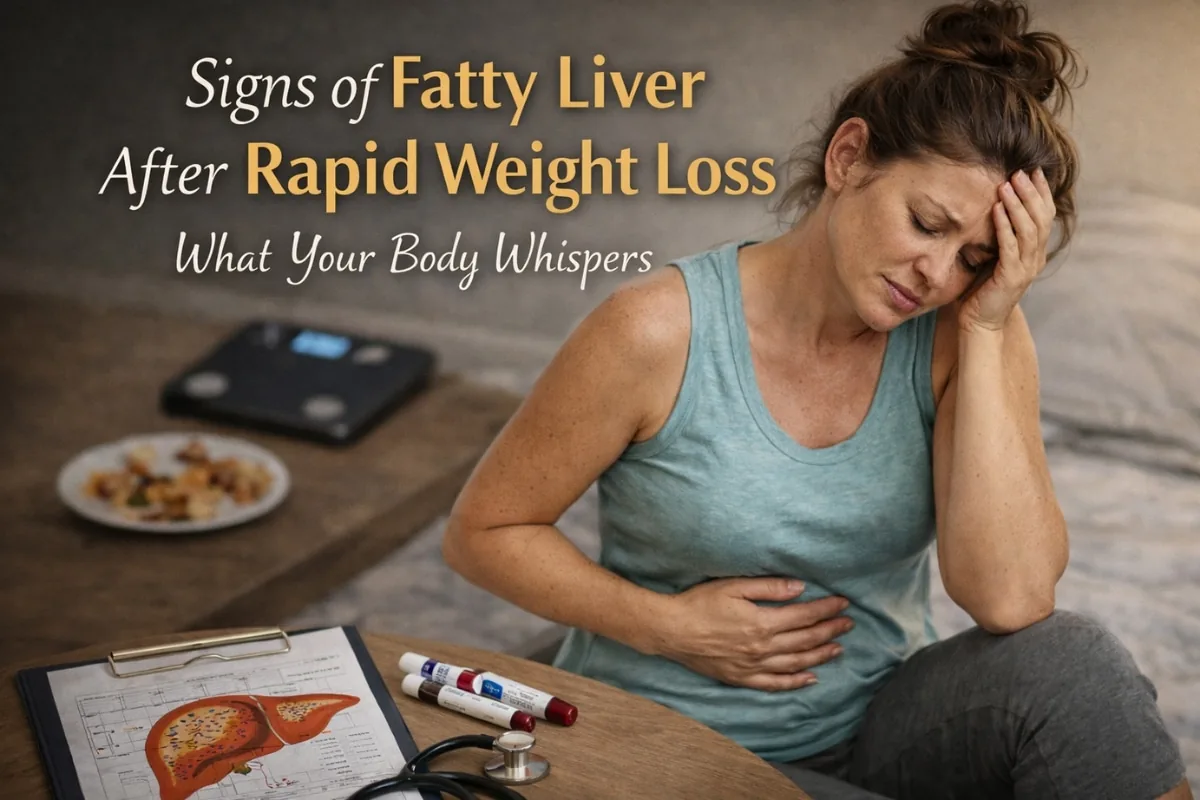
But instead of feeling lighter and more energetic, something feels slightly off. Mornings are heavier than expected, and the body feels unusually tired. For some people, these quiet signals may be connected to fatty liver after rapid weight loss, a situation that can appear when fat moves through the liver faster than the body can comfortably process it.
When Weight Loss Moves Too Fast
Many people focus on the number on the scale.
Rapid weight loss can feel like progress.
The scale moves. Clothes loosen. The plan seems to be working.
But sometimes the body tells a slightly different story.
Not loudly.
Not dramatically.
More like quiet shifts you begin to notice over time.
Instead of clear symptoms, it may look like small changes, such as:
- mornings that feel heavier than expected
- energy that does not quite return during the day
- a strange heaviness after meals
- digestion that feels a little slower
None of these signals seems alarming on its own.
But together, they can be the kind of subtle messages the body sends when the liver is working harder than usual.
For some people, these quiet signals may be connected to fatty liver after rapid weight loss, when large amounts of stored fat move through the liver faster than it can comfortably process.
The body rarely shouts about this.
Most of the time, it simply whispers.
Why Rapid Weight Loss Can Affect the Liver
When weight loss happens quickly, the body begins releasing stored fat.
That fat does not simply disappear.
It travels through the bloodstream and passes through the liver, which acts as one of the body's main metabolic processing centres.
The liver then has to decide what to do with it:
- convert it into energy
- send it back into circulation
- or store it temporarily
When large amounts of fat arrive simultaneously, the liver may not process it all immediately.
Some of that fat can remain inside liver cells for a while.
This is one of the reasons why fatty liver can develop after rapid weight loss, even in people who are actively trying to improve their health.
It can feel counterintuitive.
You are losing weight.
You expect the body to feel lighter.
But internally, the liver may be working overtime to keep up with the sudden flow of fat moving through the system.
And sometimes the body lets you know through small, quiet signals.
Signs of Fatty Liver After Rapid Weight Loss

The body rarely announces liver stress with dramatic symptoms.
Most of the time, the signals are subtle. Easy to overlook. Easy to explain away.
Especially when weight loss itself is often seen as a positive change.
But sometimes the body begins sending small whispers that the liver is working harder than usual.
Some people notice things like:
- unusual fatigue that does not match the progress on the scale
- a feeling of heaviness or mild discomfort under the right ribs
- nausea or uneasiness after eating fatty foods
- mental sluggishness or a foggy feeling during the day
- digestion that feels slower or less comfortable
- routine blood tests showing slightly elevated liver enzymes
None of these signs automatically means there is fatty liver after rapid weight loss.
But they can be signals worth paying attention to.
The body often speaks quietly first.
And when those whispers appear, it can be helpful to slow down and listen.
Why These Signals Are Easy to Miss
Rapid weight loss is often celebrated.
The scale moves.
Clothes start fitting differently.
People around you may even congratulate the progress.
In that moment, it feels natural to focus on the success.
Small physical changes can easily fade into the background.
Some of the signals linked to fatty liver after rapid weight loss tend to appear slowly and quietly:
- fatigue that seems easy to blame on dieting
- mild discomfort that comes and goes
- digestion that feels slightly different than before
Because the changes are gradual, many people assume they are simply part of the weight loss process.
And the liver itself rarely creates dramatic symptoms in the early stages.
It usually communicates in softer ways.
Which is why these early signals can pass unnoticed for quite some time.
What I Learned About Supporting the Liver
Over time, I started noticing that the body often responds better to a steadier pace.
Weight loss can still happen.
But when it happens more gradually, the body seems to adapt more comfortably.
A few simple reflections stood out to me along the way:
- slower, steadier weight loss tends to feel easier on the body overall
- balanced nutrition still matters, even when trying to lose weight
- protein and essential nutrients help support normal metabolism
- paying attention to how the body feels can sometimes be more useful than watching the scale alone
None of these ideas is complicated.
But they remind us that the body responds to more than just calories.
It is also responding to pace, balance, and the nutrients it receives while those changes are happening.
The Liver Is Surprisingly Resilient
One thing that surprised me while learning about the liver is how resilient it can be.
This organ is constantly working in the background, processing nutrients, managing fats, and helping the body maintain balance.
And in many cases, it also has a remarkable ability to recover.
When metabolism stabilises, and the body returns to a steadier rhythm, fat stored in the liver often begins to decrease again. This can even happen in situations where fatty liver after rapid weight appears temporarily during a period of fast fat loss.
That process does not usually happen overnight.
But over time, small adjustments can support that shift:
- slowing the pace of weight loss
- maintaining balanced nutrition
- giving the body time to adapt
The liver tends to respond well to gradual, consistent changes.
Which is another reminder that the body often prefers patience over extremes.
Listening When the Body Whispers

Rapid weight loss fatty liver does not usually announce itself loudly.
More often, the body sends quiet signals.
Small changes in energy.
Subtle shifts in digestion.
A sense that something feels slightly different than before.
These whispers are easy to overlook, especially when weight loss itself feels like progress.
But sometimes the body is simply asking for a slower pace.
For more balance.
For a moment of attention.
Listening to those early signals does not mean assuming something is wrong.
It simply means staying aware of how the body responds while changes are happening. Sometimes those quiet signals can be early hints of fatty liver after rapid weight loss, reminding us that the body often communicates long before problems become obvious.
0 Comments